Edmund Kean
BY MICHAEL GERBINO, Chair, Art Committee

The Club’s John Neagle Collection of paintings of actors in costume features the most distinguished thespians of the day. The exhibition in the Library comprises sixteen paintings by Neagle, three of which depict the celebrated English stage actor Edmund Kean. Kean was renowned for powerful, emotionally intense portrayals of Shakespearean villains. Neagle was considered one of the greatest portrait painters of the nineteenth century, a skill he used to depict Kean’s mastery in capturing the essence of a character and his personal intensity as an individual.
Edmund Kean (1787–1833) was born in London as the illegitimate son of the actress Ann Carey and Edmund Kean, Sr., an architect’s clerk who died when Kean was very young. Raised by Charlotte Tidswell, an actress with the Drury Lane Theatre Company, he made his first stage appearance at age four as Cupid in Jean-Georges Noverre’s ballet Cymon. Kean’s breakthrough came in 1814 at the Drury Lane Theatre, where his debut as Shylock in The Merchant of Venice captivated audiences. His short stature and harsh voice made him an unlikely star when compared to John Philip Kemble, the era’s dominant actor, whose style was formal and declamatory. Kean’s performances were raw and passionate. He redefined roles like Richard III, Iago, Macbeth, and Othello, earning praise from critics like William Hazlitt, who compared watching Kean to “reading Shakespeare by flashes of lightning.”
Despite his immense talent, Kean’s personal life was tumultuous. His reputation suffered heavily from his struggles with alcoholism, reckless spending, and a highly publicized 1825 adultery trial about his involvement with Charlotte Cox, the wife of a London alderman. He had married the actress Mary Chambers in 1808, but they separated after the scandal. Kean’s reckless behavior, which included public drunkenness and disputes with playwrights, further alienated audiences. He had two sons with Chambers; his son Charles Kean also became an actor.
He performed internationally in Paris, New York, and Quebec, with mixed success. By the 1820s, his health and career had heavily declined because of addiction and overwork. His final performance was as Othello, opposite his son Charles at Covent Garden in March of 1833, where he collapsed on stage; he is reported to have said, “Dying is easy; comedy is hard.” He died on May 15, 1833, in Richmond, Surrey.
Kean’s legacy lay in his revolutionary approach to acting, which emphasized emotional authenticity rather than classical restraint. His life inspired Alexandre Dumas’ play “Kean," which was adapted by Jean-Paul Sartre over a century later. A monument to him stands in Drury Lane’s Rotunda, and he is buried in All Saints Church, Catherington, Hampshire.
The Neagle collection also contains a portrait of Mary Ann Duff. Duff was famous for her roles as Ophelia, Desdemona, and Lady Macbeth. In 1821, she played Hermione in "The Distrest Mother" alongside Edmund Kean. Her performance was so powerful that Kean feared it might overshadow his own. Now they meet again in the hallowed walls of The Players, along with the other stage greats of that era.
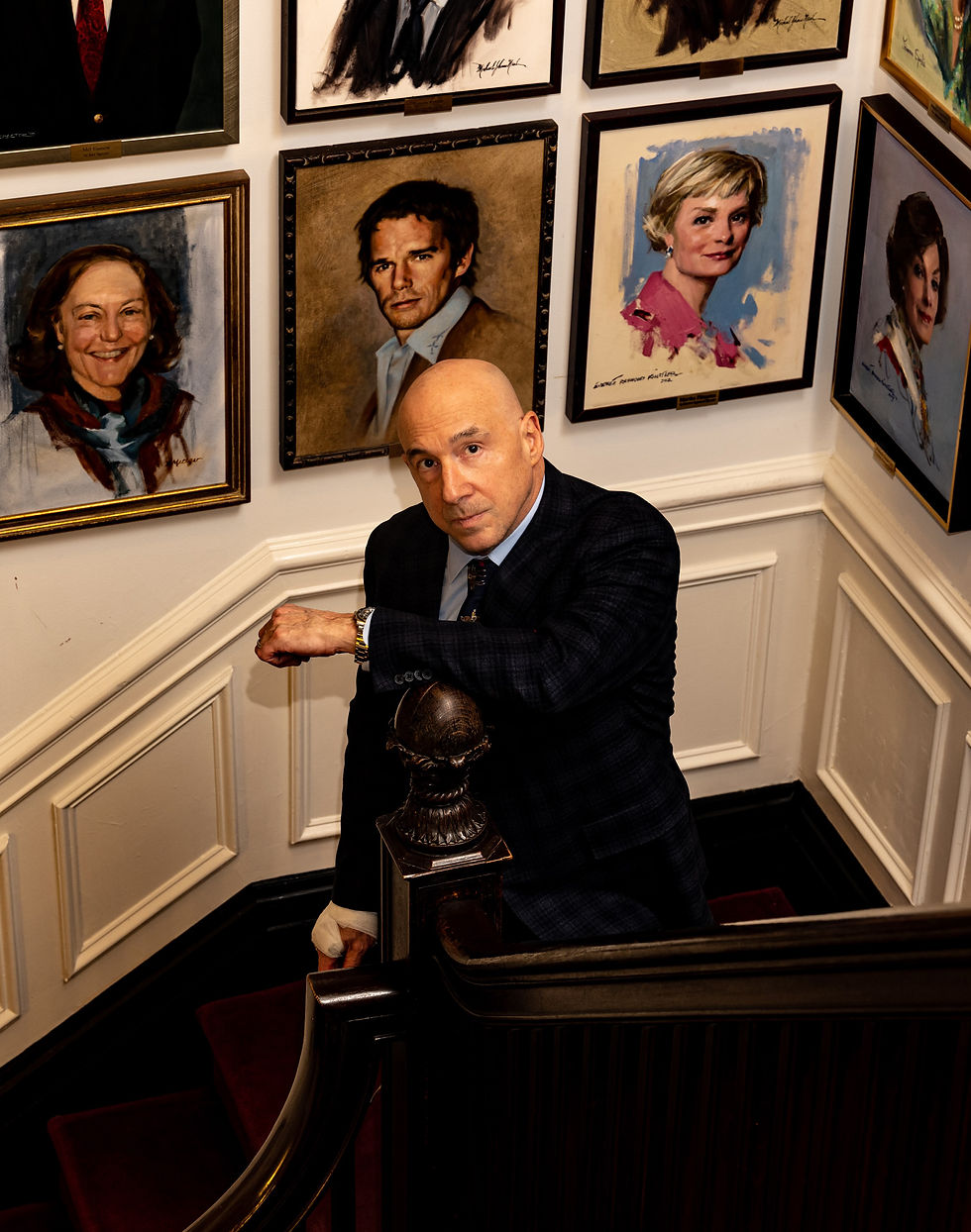
Michael Gerbino writes the monthly email blast “Artwork at The Players” and is the current Chair of the Art Committee. Michael also serves on the Board of Directors of The Players Foundation for Theatre Education.


Comments